PlexRS services
Web applications built around your workflows
A portal or internal tool earns its place when it makes a real workflow easier to manage. We start with the people, decisions and systems involved, then define a useful first release.
Discuss your applicationProject fit
When this is useful
For teams that need customer portals, internal tools, operational dashboards or a connected SaaS product. The starting point is the work the software must support, including exceptions that a simple form or spreadsheet cannot handle well.
Before the build
Decisions we work through
Users, roles and workflow states
We map who can see or change information, what moves work to the next state, and how exceptions are handled. Permissions and the operational view are part of the product scope.
Source systems and integrations
We identify which system owns each piece of information, what APIs are available, and what happens when an integration fails. Data and integration requirements are agreed before choosing an architecture.
A useful first release
We separate the essential workflow from later extensions, test the direction with a prototype where useful, and agree what needs to be validated before the product is used by a team.
Agreed scope
What the work covers
- Workflow discovery, user journeys and an agreed first-release scope.
- Interface design and prototypes for consequential product decisions.
- Data and API design, role-aware interfaces and agreed integrations.
- Validation of workflow states, exceptions and the handoff requirements.
What changes the scope
User roles, workflow states, reporting, source-system access and integration reliability drive complexity. We use discovery to make those dependencies explicit, then calibrate delivery against the agreed scope. A concept preview is evidence of product direction, not a production estimate or a promise of identical results.
Ownership and handoff
We agree source-code access, data ownership, deployment responsibilities and the operating documentation needed by your team. Maintenance, external services and future extensions are discussed as part of the handoff rather than assumed.
Concept evidence
See the product decisions
These examples are concepts and previews. They demonstrate design and workflow choices; they are not client deployments or commercial results.
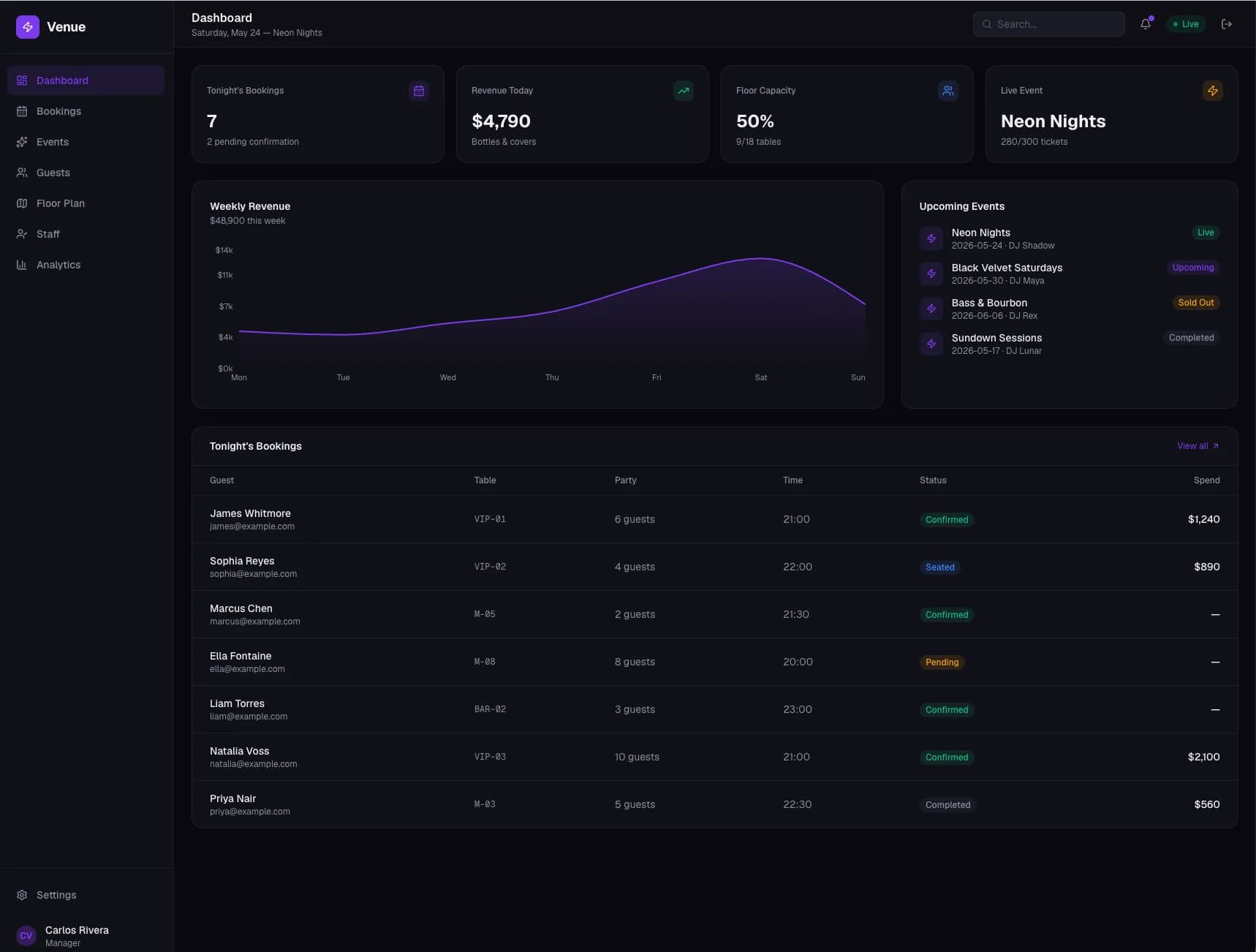
Venue concept
A rendered dashboard concept demonstrating information architecture, CRM, booking, workflow and reporting patterns.
Read the Venue case study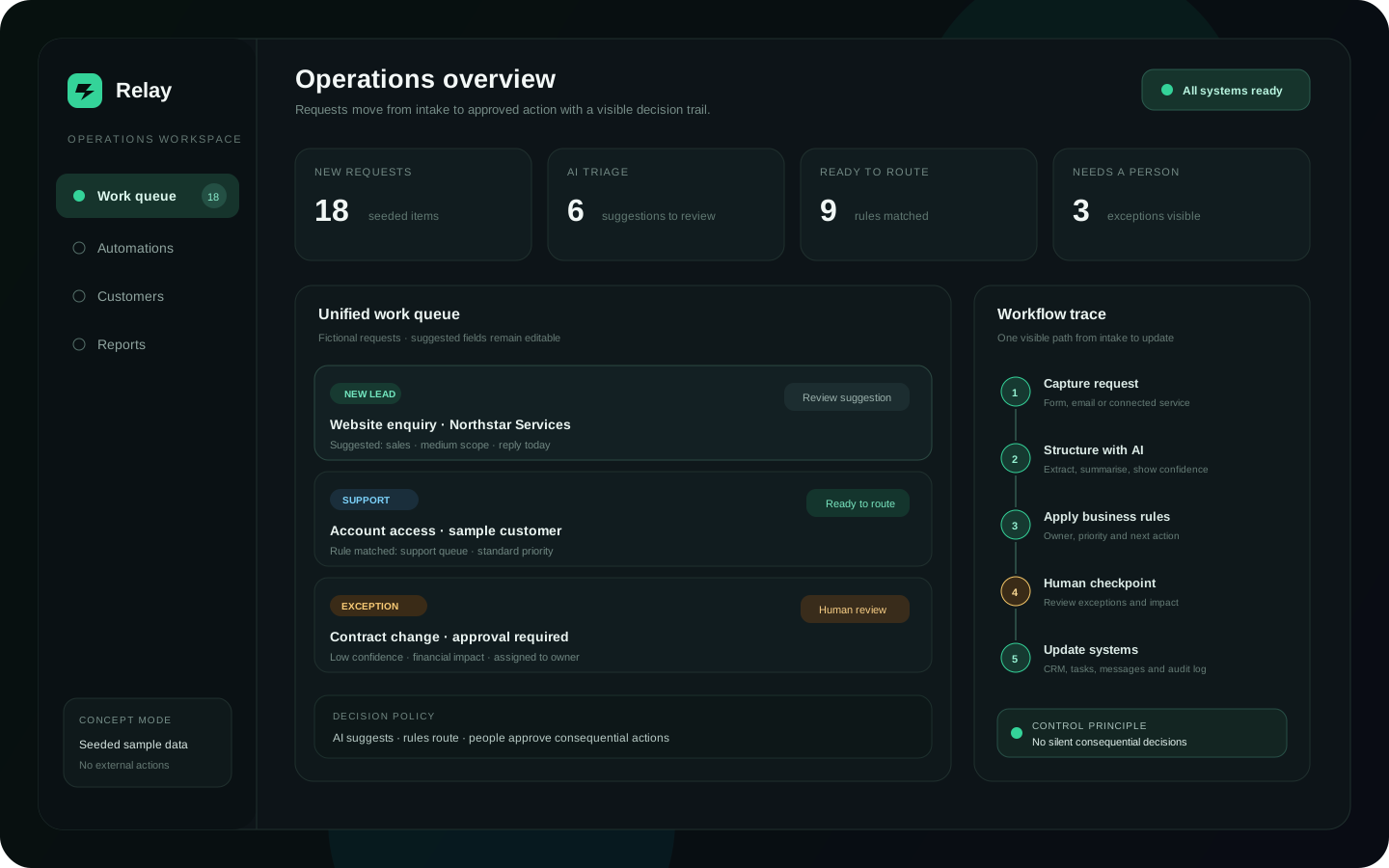
Relay concept
A rendered workflow case study with seeded sample data, explicit decision boundaries and a system flow from intake to approved downstream updates. It is a product concept, not a deployed client system.
Read the Relay case studyDiscuss your application
Send the business context, the current site or workflow, and the part you want to improve. We will clarify the useful scope and next step.